
Honored as Lighting Brand at TOI Home & Decor Awards 2026
ALL TARIFFS & TAXES INCLUDED . DHL EXPRESS WORLDWIDE . 3 - 5 DAYS TRANSIT . FULLY CUSTOMISABLE ON REQUEST

Handmade pendant & hanging lights for kitchen islands & dining tables
Kitchen Lighting Fixtures







All About Ceramic Lights
Kitchen vs Dining Lighting Priorities
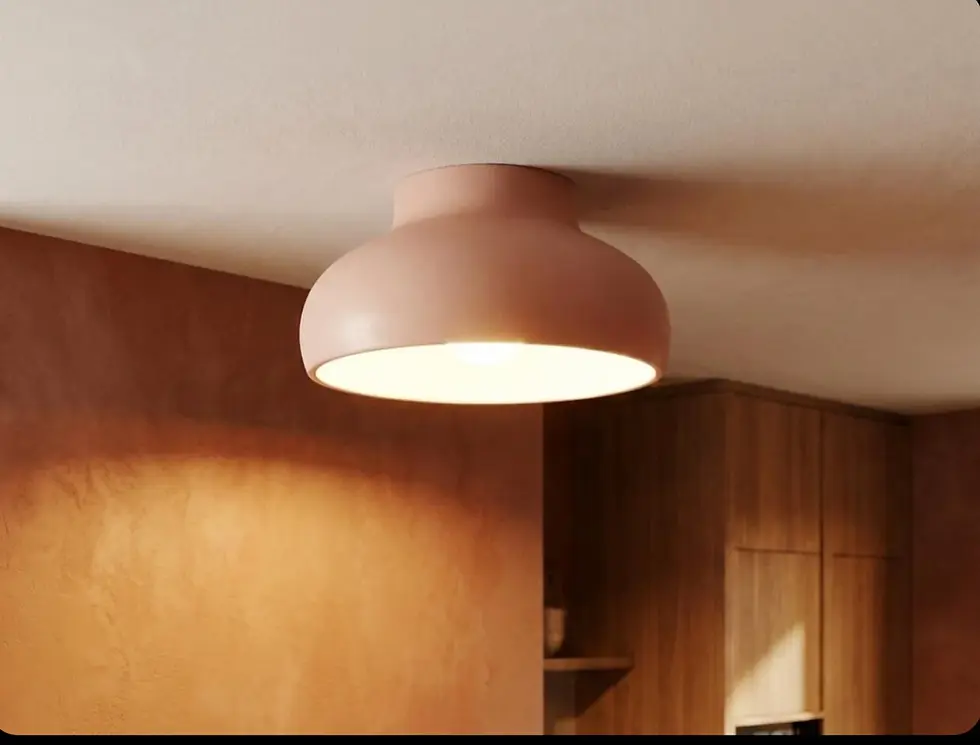
Kitchen and dining spaces call for different lighting priorities based on how each room gets used. Kitchens need consistent, well distributed light across prep and cooking surfaces, pendant lights, flush mount ceiling lights, and wall sconces all work well since ceramic is heat resistant, easy to clean, and holds its finish over time. Dining spaces prioritise atmosphere instead, a pendant or chandelier above the table becomes a focal point and mood setter, softer output suited to seated gatherings rather than active work. Wall sconces round out either room, adding warmth without acting as the main light source.
Choosing Pendant Size and hanging Height
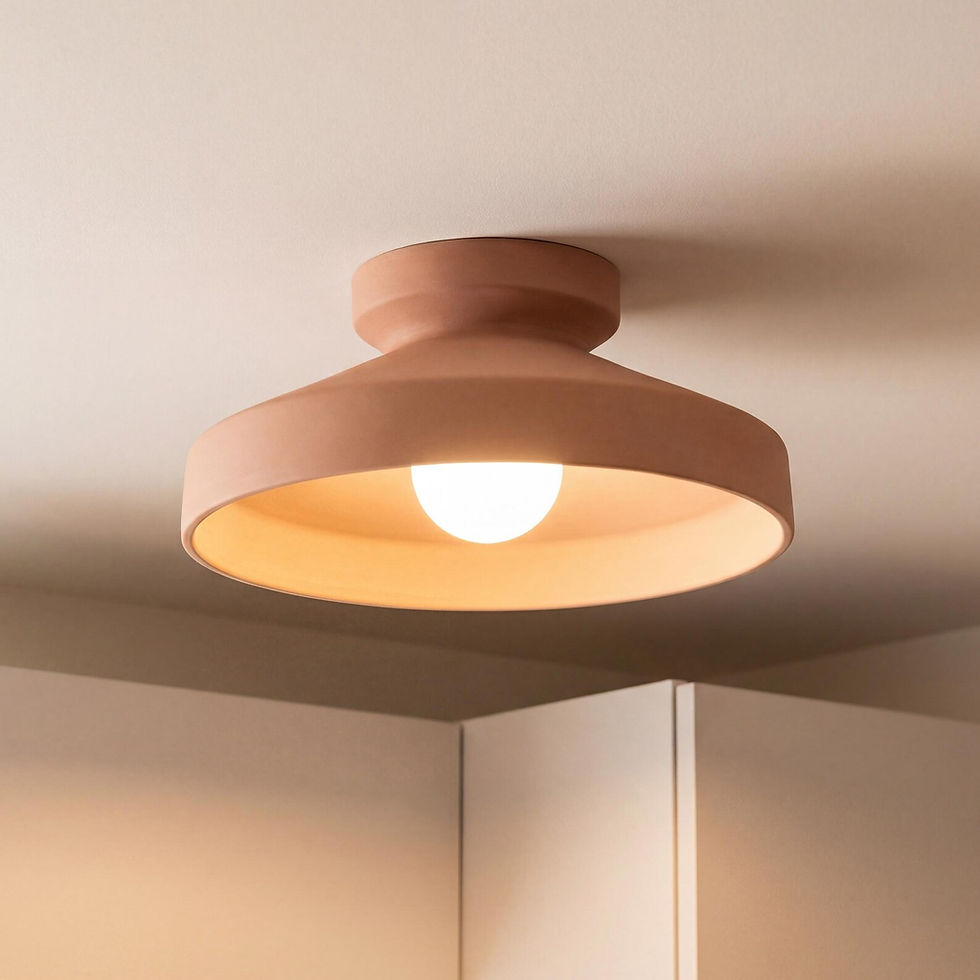
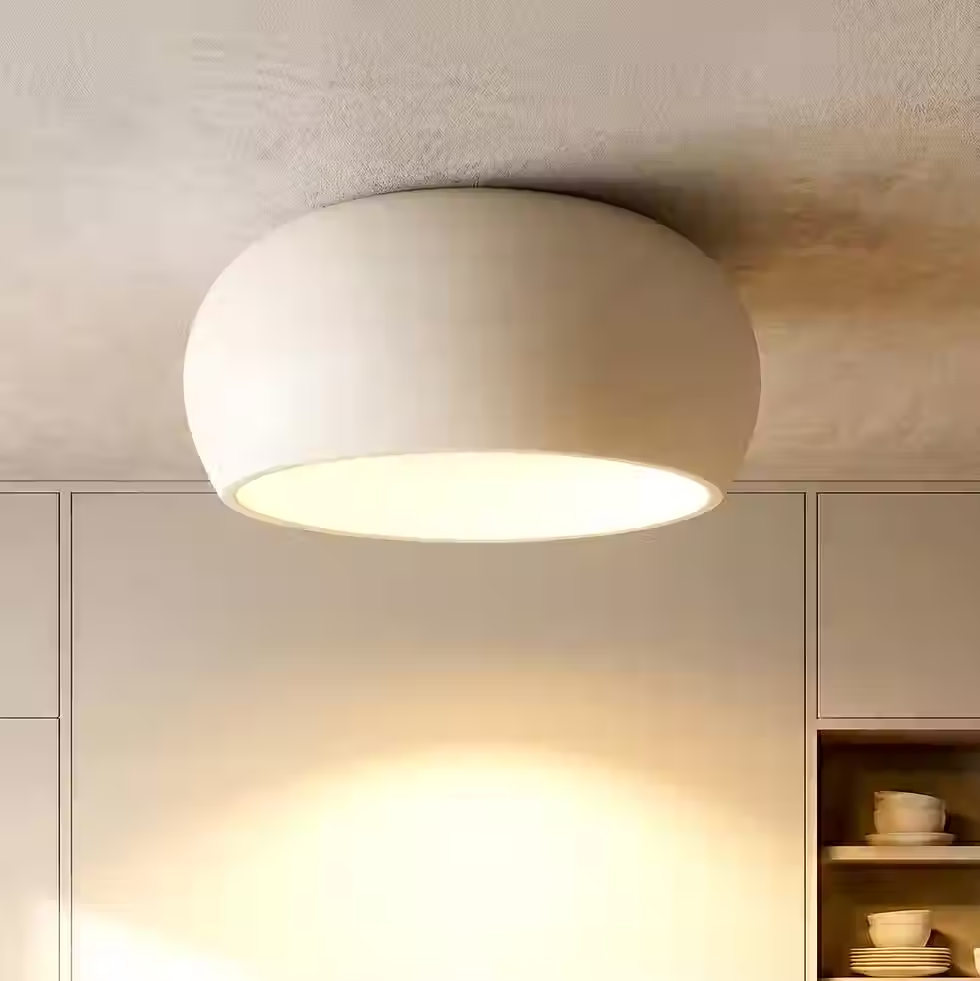
Match your pendant diameter to the island or table it covers rather than choosing by eye. On standard ceilings, hang the shade so its lowest point sits thirty to thirty six inches above the counter, slightly higher for islands with bar stool seating so the light clears eye level without losing focus on the surface. Taller ceilings do not need a longer drop, keep that same surface to shade distance and size the fixture up instead. Custom cord lengths are available at checkout. Low ceilings suit a flush mount instead.
How Many Pendant Lights Do You Need Over a Kitchen Island?
Pendant count comes down to island or counter length. As a general rule, plan one pendant for every two and a half to three feet of surface, longer runs suit a row of three or more rather than spacing fewer fixtures too far apart. Leave twenty to thirty inches of breathing room between each pendant so the arrangement reads intentional rather than crowded, spaced evenly in from each end. Kitchen island pendants are available individually or in matched or tonal sets, with consistent cord lengths so every pendant hangs level.
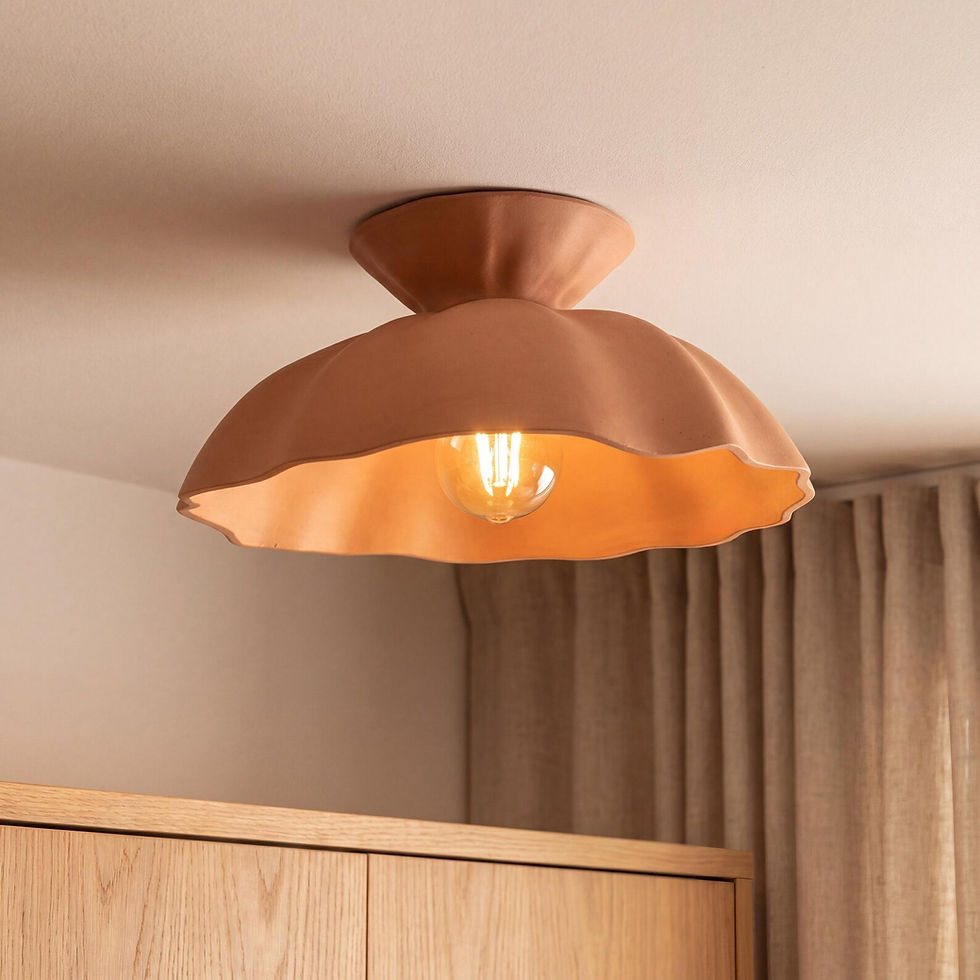
Dimmable Lighting and Finish Options
Whether your kitchen lighting should be dimmable depends on how the space gets used through the day, bright and steady for prep work, softer for casual meals or evening entertaining. Every socket is compatible with dimmable bulbs, so output can shift without changing the fixture itself. Finishes range from raw clay tones, natural, white, and terracotta, to a wider set of colour finishes for a bolder look. Mixing shapes or finishes across a kitchen works well as long as the overall palette stays consistent rather than competing for attention.
