

Ceramic Chandeliers & Cluster Pendant Lights
Wabi-sabi, statement & bespoke ceramic chandeliers for staircase, dining & living rooms










All About Ceramic Lights
Ceramic Cluster Pendant Lights: How to Configure Your Own
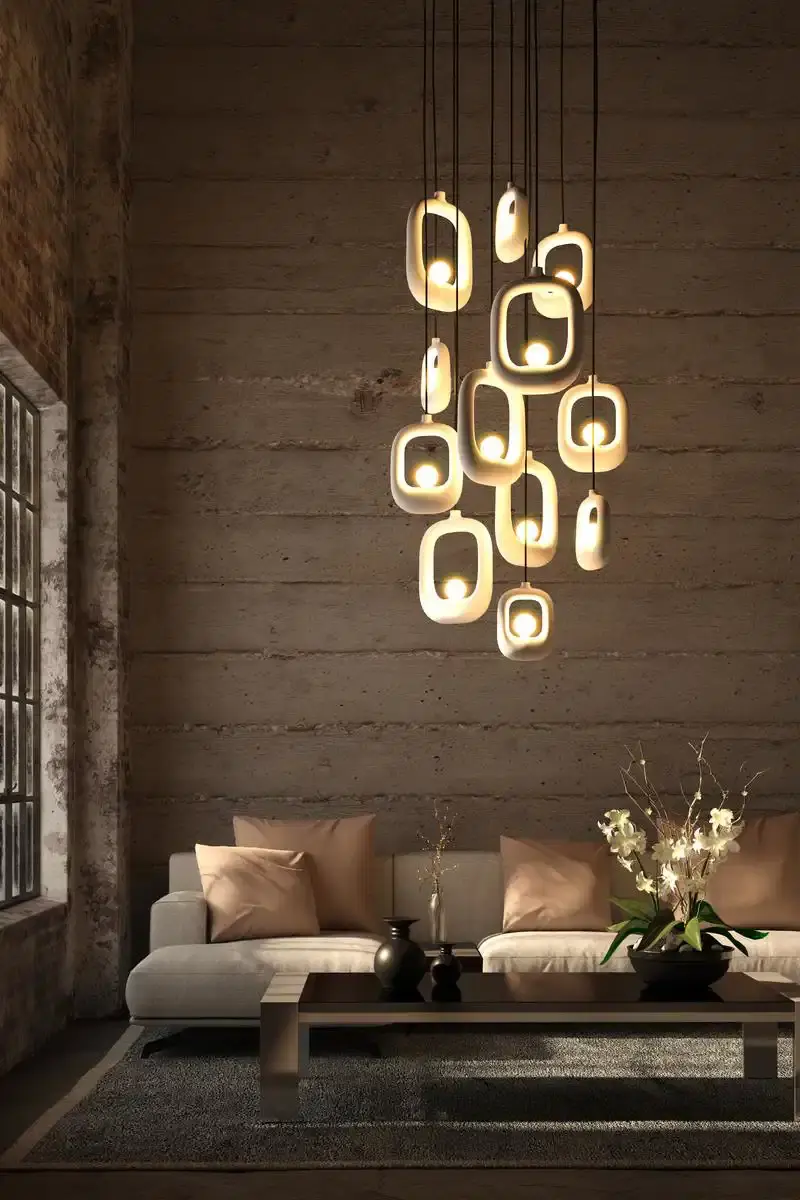
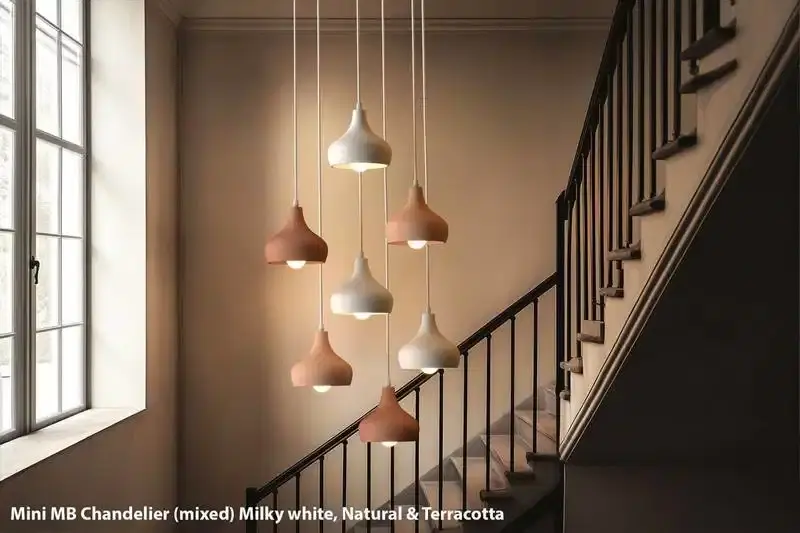
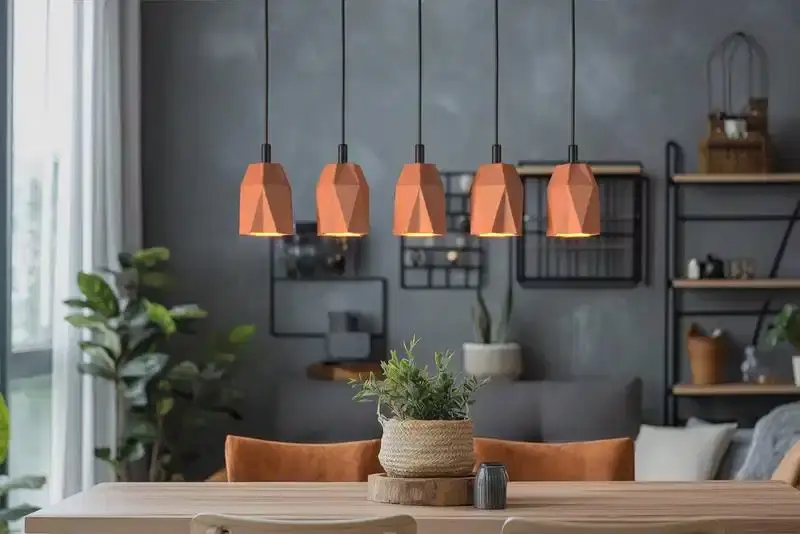
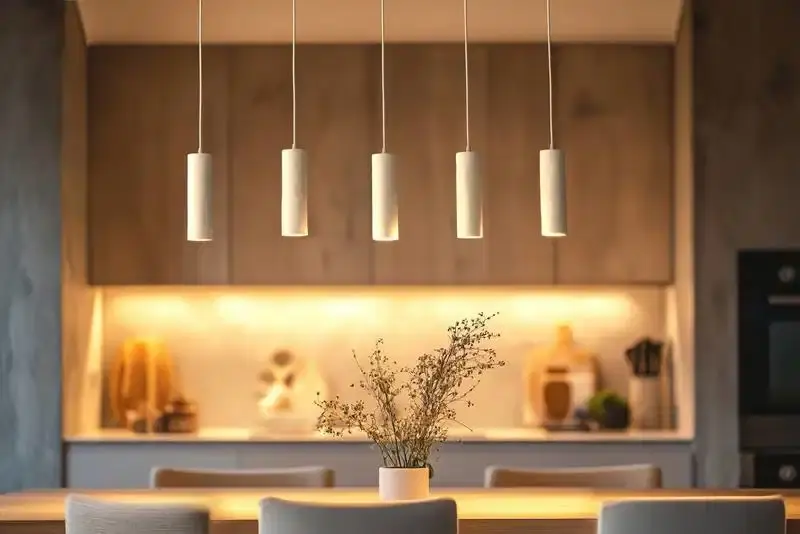
Unlike a single large chandelier, a ceramic cluster pendant light gives you full control over the visual weight, colour palette and scale of your installation. Each cluster is built from individual ceramic pendant units, hung from a shared ceiling rose at varying cord lengths to create a cascading arrangement. The most common configurations for dining tables are three to five pendants spread across the table width. For kitchen islands, two or three pendants in a row give even light distribution. For staircases and double-height voids, seven to twelve units at staggered heights create the cascading effect that makes ceramic cluster chandeliers one of the most searched and most photographed lighting styles of 2025-2026. Every Naaya cluster can be configured to your specification: number of pendants, cord lengths, clay types and colour finishes. Mix terracotta and natural clay for a tonal, organic effect, or choose a single finish across all units for a more considered, uniform look. Each pendant in the cluster is handmade individually, so slight variations in form and surface texture are inherent and celebrated
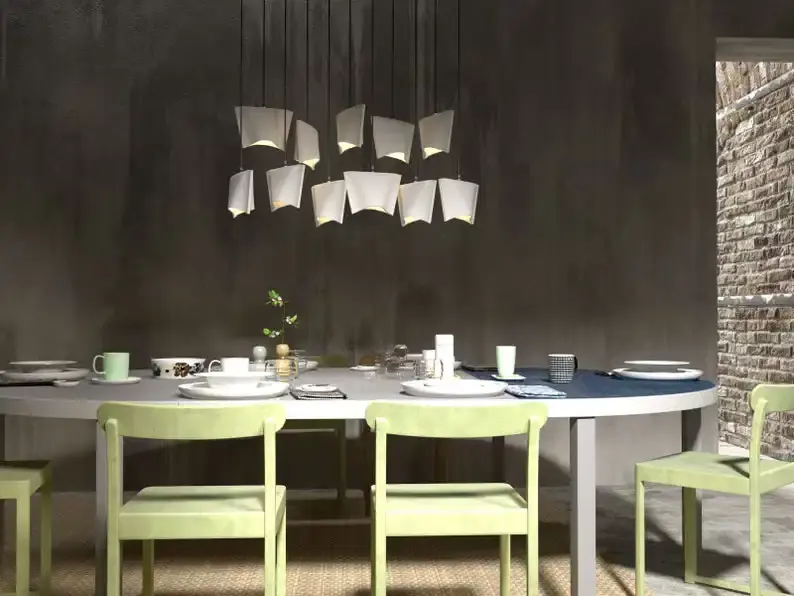
Ceramic Chandeliers for Dining Tables: What Works and Why
A ceramic chandelier over a dining table does something a standard pendant cannot: it fills the vertical space above the table with presence and warmth rather than leaving it empty between the ceiling and the shade. This matters most in rooms with ceilings above 9 feet, where a single pendant can look isolated and undersized relative to the table below. For rectangular dining tables, the most effective chandelier configurations hang 28 to 34 inches above the tabletop with a spread that covers roughly two-thirds the table length. A cluster of five to seven ceramic pendants at varied heights achieves this naturally, distributing both light and visual interest across the full table rather than concentrating it at a single point. Wabi-sabi ceramic chandeliers work particularly well over dining tables because the organic, imperfect forms complement the natural textures of wood, linen and stone that appear in most dining rooms. Terracotta and natural clay finishes warm the light they cast, making food and faces look better than the cooler light from glass or metal shades.
Ceramic Chandeliers for Staircase & Stairwell: A Buyer's Guide
A staircase chandelier is one of the most complex lighting purchases a homeowner makes, and one of the most impactful when done correctly. The key variables are ceiling height, staircase width, and the visual relationship between the fixture and the staircase below. For straight staircases with a single open void, a statement ceramic chandelier hung from the highest point of the ceiling creates a dramatic focal point visible from both floors. The fixture should hang so its lowest point sits roughly level with the upper floor landing, leaving the full staircase below it visually unobstructed. For L-shaped or spiral staircases, a cascade of ceramic pendant clusters at staggered heights follows the movement of the staircase more naturally than a single chandelier. Three to five ceramic pendants hung at descending cord lengths mirror the diagonal of the staircase and create a dynamic effect that reads as architectural rather than decorative. Custom cord lengths are available on all Naaya chandeliers and cluster configurations. Specify your ceiling height and required drop at checkout and each unit ships pre-cut to your specification.
Best Ceramic Chandeliers: How to Choose
"Best ceramic chandelier" is one of the most searched lighting queries in 2025-2026, and for good reason: ceramic chandeliers occupy a specific position in the market that no other material fills. They are warmer than glass, more refined than rattan, more durable than fabric, and far more distinctive than metal. The question is not whether ceramic is the right material for a chandelier but which ceramic chandelier form is right for your space. For kitchen islands and dining tables with standard 8 to 10 foot ceilings, a small to medium ceramic cluster of three to five pendants gives the visual presence of a chandelier without overwhelming the room. The Morning Bell, Dome and Canista forms work particularly well in this configuration. For double-height spaces, staircases and formal dining rooms with high ceilings, a larger statement ceramic chandelier with seven or more units fills the vertical space properly. The Flight, Drops and Sunrise Rings configurations are designed specifically for these installations. For wabi-sabi and organic interiors, terracotta and natural clay finishes in irregular, hand-thrown forms give the most authentic handmade quality. For contemporary and minimalist spaces, off-white and grey finishes in cleaner geometric profiles integrate without competing with the surrounding interior.
Wabi-Sabi Ceramic Chandeliers: Design Guide
Wabi-sabi chandeliers are the fastest-growing category in handmade ceramic lighting. The reason is straightforward: a wabi-sabi ceramic chandelier brings organic warmth and handmade character to the one fixture in a room that has the most visual presence. Unlike a wabi-sabi pendant over a kitchen island or a wabi-sabi wall sconce in a hallway, a chandelier is seen from everywhere in the room simultaneously, making the material and form choice more consequential. The defining qualities of a wabi-sabi ceramic chandelier are imperfect surfaces, organic forms, and the visible evidence of hand-throwing or hand-sculpting. No two pieces in a Naaya wabi-sabi cluster are identical, which gives the overall arrangement a natural, gathered quality that manufactured chandeliers cannot replicate. Terracotta is the most popular finish for wabi-sabi ceramic chandeliers because the warm orange-brown clay tone references earth, pottery and craft simultaneously. Natural clay is the quieter alternative: a warm off-white that works in rooms where terracotta would compete with existing warm tones. Both finishes deepen in colour under warm bulb light, which is the condition under which a dining or living room chandelier operates most of the time.
Care and Maintenance
Care and Maintenance Ceramic pendants are easy to maintain. Dust regularly with a dry or slightly damp cloth. For stains on a matte surface, use mild soap and water, working in steps: wipe, dry, repeat. Do not attempt to clean the entire surface at once. Avoid abrasive cleaners, harsh chemicals, and sticky tape, as these can damage matte finishes. For pendant cords and fittings, a soft wipe is sufficient to remove dust. Keep the surface dry after cleaning. Installation Tips Pendant lights must be installed by a licensed electrician. All Naaya pendants are UL certified. Because ceramic pendants are heavier than standard fittings, mount them into wooden studs, not plasterboard, to ensure a secure fixing. Each pendant requires a dedicated ceiling outlet. For multiple pendants on a single run, a canopy plate system allows several fixtures to share one outlet. Standard hanging height is 30 to 36 inches above a dining table or kitchen island. In open areas, keep the lowest point at least 7 feet from the floor to allow clear movement below. Frequently Asked Questions How many pendants should I hang above a kitchen island? One pendant per 2.5 to 3 feet of island length is a reliable starting point. Can I mix pendant styles in one room? Yes. Mixing shapes or finishes works well provided the clay finish or overall colour palette stays consistent across pieces. What is the correct height for pendants above a dining table? 30 to 36 inches above the tabletop for standard ceiling heights. For ceilings above 9 feet, increase the drop proportionally so the light source stays within the same visual zone above the table. Are Naaya pendants dimmable? All sockets are compatible with dimmable bulbs. Check that your dimmer switch is rated for LED loads if using LED bulbs. Can I customise cord length? Yes. Cord length is fully customisable on request. Specify the required drop length at the time of ordering.
